
The date 29 July 1423 is today widely known as the moment King Władysław Jagiełło granted Łódź town rights. Yet this is only one of four documents that, within less than twenty years, regulated the legal status of what was then a small settlement on the Łódka river. Two of them were private, issued by the bishops of Włocławek, and two were issued by the state, from the royal chancery.
1414 - the first document, which few remember
The earliest of the four documents was issued on 15 May 1414 by the Włocławek chapter, which owned the land at this location. It granted the new settlement town rights under the name Ostroga - this is the document often omitted from popular accounts of the origins of Łódź, even though chronologically it comes first. It was a private document: the chapter, as the owner of the land, could establish towns on it independently, without the involvement of state authority.
1423 - the privilege of Władysław Jagiełło
Nine years later, on 29 July 1423, in Przedbórz, King Władysław Jagiełło issued a privilege transforming Łódź into a town under state law. The document regulated legal and administrative matters as well as the new settlement's market rights - this is the act now treated as the official founding date of the city of Łódź, marked by city authorities as the anniversary of its charter. Unlike the 1414 document, this one was issued by the state - the royal chancery granted the settlement a status the chapter alone could not provide.
1424 and 1433 - two confirmations
A year later, in 1424, the bishop of Włocławek, Jakub Pella, issued another document regulating the townspeople's obligations to the chapter, directly referring to the regulations from ten years earlier. The last of the four documents was drawn up in 1433 at the castle in Koło, where Władysław Jagiełło confirmed the earlier privileges for Łódź in the form of a so-called renewal privilege, also extending the town's market rights. This kind of confirmation was fairly common practice in the Middle Ages - towns regularly asked rulers to renew their privileges, especially after a change of monarch or in disputed situations - but they rarely survive in such number and in such a short span of time as in the case of Łódź.
Why this matters at all
For historians, an abundance of sources is a rare comfort - most towns in the region have one surviving founding document, sometimes none at all, and their origins must be reconstructed indirectly, from later mentions and copied registers. In the case of Łódź, the four surviving documents allow the settlement's changing status to be traced fairly precisely - from a private church-owned town, through state recognition, to further confirmations and extensions of rights within barely two decades. This is also one of the reasons why the date 1423 is so firmly rooted in the city's identity, even though the settlement itself already existed earlier.
Where to look for traces of that Łódź
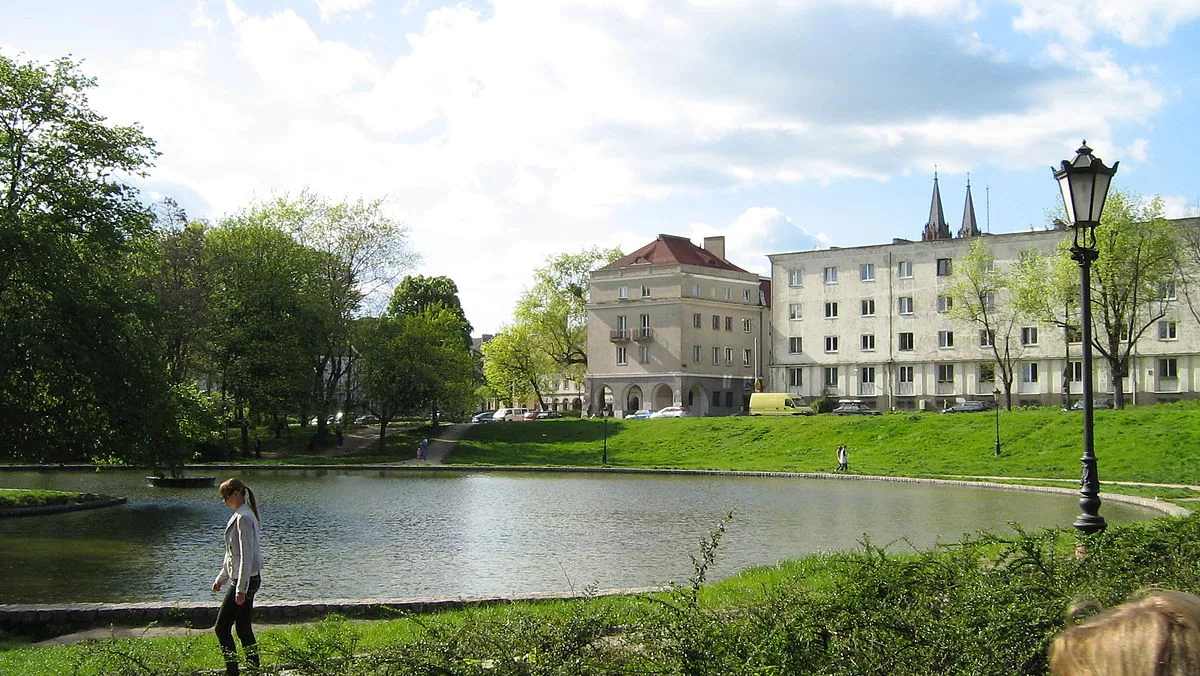
The place where this whole story began lies today near the present-day Old Town Park - where the city's oldest settlement layout once stood in the Middle Ages. More about the name of the city itself and the disputes over its origin can be read in a separate article in the "Poznaj Łódź" (Discover Łódź) series, linked from here, and the region's archaeology is explored at the Archaeological and Ethnographic Museum in Łódź - it is worth checking current opening hours before visiting, as the venue is sometimes temporarily closed for exhibition work.
Practical info
Traces of the documents themselves cannot be seen on the ground - they are archival materials, not buildings - but the historical context is best felt on a walk through the oldest part of Łódź, around today's Plac Kościelny and the archcathedral basilica, where the city's life has been concentrated for centuries. A walk around this area, together with the Old Town Park, takes about an hour and is free all year round - and it also makes a good starting point for further exploring the historic monuments of Łódź, of which there are far more than the industrial cityscape of the centre might suggest.

Be the first! Add a comment.
You need to log in to add a comment.
Log in