
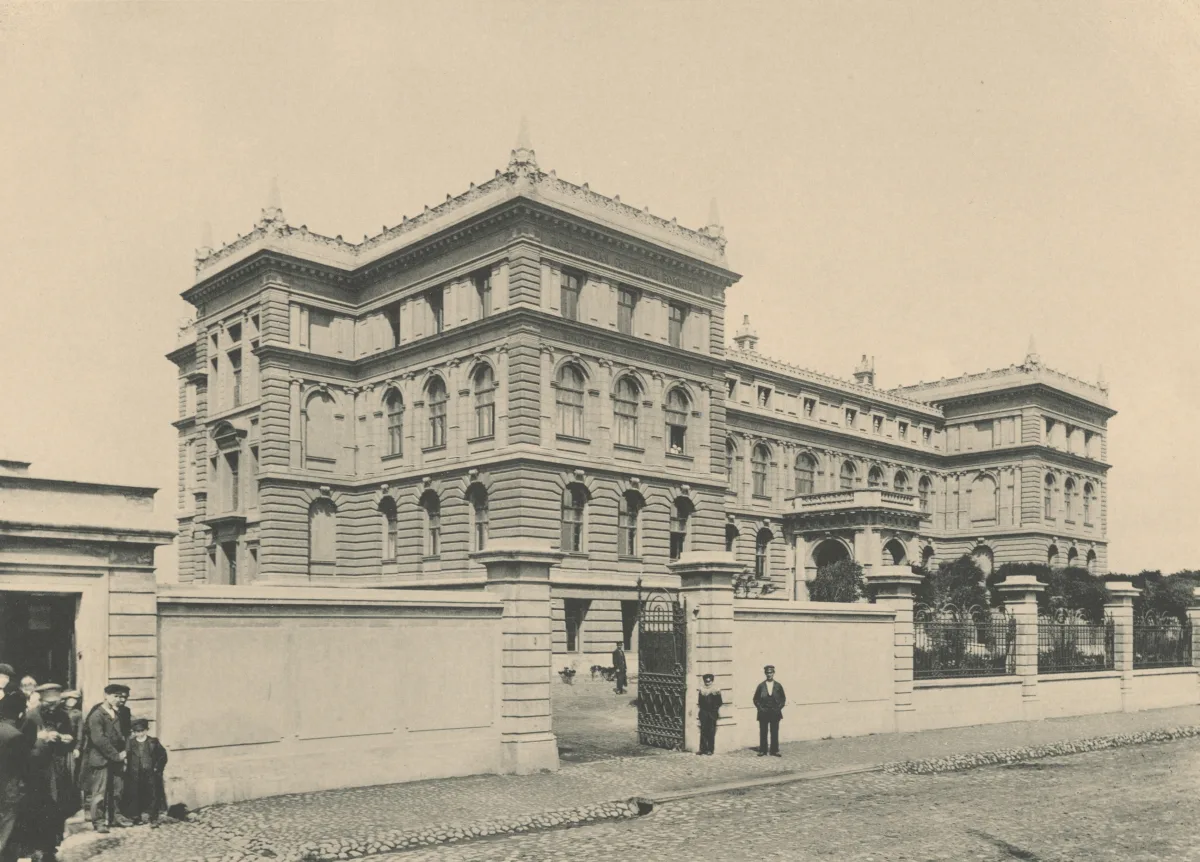
Łódź, which today we associate with factory owners' palaces and Art Nouveau tenement houses, was in the 19th century also a city that regularly went through waves of epidemics. Cholera returned here every dozen or so years, and its victims were most often residents of the poorest, most densely populated districts - exactly where the city's famous pace of growth was being driven.
The first wave as early as 1831
Cholera reached Łódź for the first time on 14 July 1831, striking first the Jewish quarter around what is now the Old Market Square (Stary Rynek) - the most densely populated and poorest part of the city at the time. The epidemic spread across Europe as part of the first great cholera pandemic of the 19th century, which reached Poland along with troop movements during the November Uprising. Łódź had only a few thousand inhabitants at the time, but even then the mechanism that would repeat itself throughout the century was already visible: the disease spread fastest wherever sanitary conditions were worst.
A city that grew faster than its infrastructure
In the following decades Łódź experienced rapid industrial growth - from a small weaving town it became one of the largest industrial centres of Central Europe, and its population grew at a pace that sewer, water-supply and sanitary infrastructure could not keep up with. Workers flowing into the factories settled in overcrowded tenement houses, often with no access to clean water. It was precisely this gap between the pace of industrialisation and the state of municipal infrastructure that kept the city vulnerable to further waves of illness throughout the entire 19th century.
Further waves - 1872-1873, 1892, 1894
After the 1831 epidemic, cholera returned to Łódź several more times, among others in 1872-1873, in 1892 and in 1894. The 1892 wave was part of a great cholera epidemic that in the same year also devastated Hamburg and many other Central European cities, arriving along trade and migration routes. In Łódź, as before, the working-class districts and the Old Town area were hit hardest, where clusters of cheap, overcrowded housing favoured the spread of a disease carried by contaminated water.
Why the Old Town specifically
The area of today's Wolborska Street and the Old Market Square, the historic centre of pre-industrial Łódź, became in the 19th century one of the poorest parts of the rapidly expanding industrial city - it was inhabited mainly by Jewish residents and the poorest workers, crammed into old, dense buildings without adequate infrastructure. It was precisely here that cholera epidemics struck hardest and most often, which is worth remembering today while walking through this part of the city, which now looks quite different from the days of factory-owning Łódź.
The other side of the Łódź industrial miracle
The history of cholera epidemics in Łódź nicely complements the well-known stories of the great factory owners - Poznański, Scheibler or Geyer - by showing the darker side of the same process. While the factory owners built palaces and funded foundations, ordinary workers lived in conditions that regularly brought epidemics to the city. This is a contrast clearly visible when comparing today's historic industrialists' residences, such as the Scheibler Palace or the former headquarters of the Ludwik Geyer Joint-Stock Company, with the conditions in which most residents of that era's Łódź lived.
What still recalls those times today
Łódź itself has no dedicated museum devoted to cholera epidemics, but the context of those times is well conveyed by exhibitions devoted to the city's history and the textile industry, among others at the Central Museum of Textiles in the former Biała Fabryka (White Factory) of Geyer, which also shows the working and living conditions of 19th-century workers.
It's also worth looking into the materials of the State Archive in Łódź, which holds sanitary documentation from that period and regularly publishes popular science articles about it, as well as browsing the offer of Łódź museums devoted to the city's history. A walk around the Old Market Square area, though rebuilt today, still lets you imagine the scale of overcrowding that the 19th-century city faced.
More about the industrial history of Łódź and its residents can be found in the Discover Łódź section, and a review of the surviving landmarks of old factory-owning Łódź in the historic landmarks category of the portal.

Be the first! Add a comment.
You need to log in to add a comment.
Log in